I. Market Overview
The domestic market for intelligent warehousing is expanding rapidly, with its total scale projected to exceed 200 billion RMB by 2025—a growth rate outpacing the global average. While the landscape is currently dominated by hardware (automated storage and retrieval systems, racking, sorters, and AMRs/AGVs), the share of software, scheduling systems, and operations & maintenance services is steadily increasing.
• Large-scale e-commerce companies, express delivery firms, and leading manufacturers have already implemented "goods-to-person" systems and "dark warehouses" (fully automated, unmanned facilities) on a significant scale.
• Small and medium-sized enterprises (SMEs) are moving away from blind, all-at-once full automation; instead, they favor modular, flexible, and scalable solutions that allow for phased upgrades (e.g., gravity flow racks, shuttle systems, and lightweight robots).
II. Mainstream Equipment
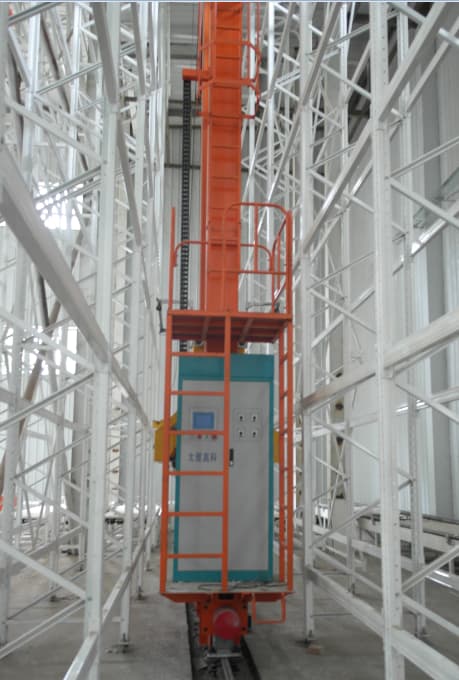
1. High-density storage: Automated storage and retrieval systems (AS/RS), shuttle racking, gravity flow racks, and double-deep racking—all aimed at maximizing space utilization.
2. Mobile robots: Autonomous Mobile Robots (AMRs) and climbing robots; the industry is shifting from traditional AGVs (which follow fixed tracks) toward robots that utilize autonomous visual navigation.
3. Sorting systems: Cross-belt sorters, put-wall (picking-to-light/sorting wall) systems, and vision-based picking solutions.
4. Software layer: Warehouse Management Systems (WMS) and Warehouse Control Systems (WCS), integrated with AI for inventory optimization, path scheduling, and order forecasting—marking a transition from "automated equipment" to "intelligent systems."
III. Key Trends
• Flexibility as a priority: Rather than pursuing complete, one-time, unmanned automation, the industry now favors "human-machine collaboration," which better accommodates fluctuations in order volume.
• AI and Embodied AI: Through visual recognition, dynamic slotting (storage location) recommendations, and swarm scheduling, robots are evolving from simple transport tools into intelligent operational agents.
• Green and low-carbon operations: The adoption of energy-efficient equipment, photovoltaic-powered warehouses, and energy-saving lighting has made "green warehousing" a significant value-add for projects.
• Domestic expansion abroad: Chinese-made racking, robots, and comprehensive warehousing solutions are being exported in large volumes to markets in Southeast Asia and the Americas.
• Retrofitting existing facilities: Rather than demolishing and rebuilding, many older warehouses are undergoing automated upgrades within their existing footprints. IV. Current Pain Points
• High initial investment with a long payback period;
• Lack of protocol interoperability between different equipment vendors, often leading to data silos;
• Stability challenges in complex, non-standard scenarios (e.g., irregularly shaped goods, heavy loads, or mixed storage of diverse product types);
• Significant shortage of specialized operations and maintenance (O&M) personnel.
V. Summary
The industry has transitioned from a phase of "showcase projects" to one of large-scale implementation. While large enterprises are adopting high-end intelligent systems, many factories and logistics centers favor a more cost-effective approach—combining high-density racking with targeted automation. This strategy balances storage density with manageable investment, which explains the enduring popularity of gravity-flow and shuttle-based racking systems.
---By Zita Jian
25th, Nov. 2026

添加 : NO.409 West Jianshe Road, Economic Development Zone, Jinhu County, Jiangsu Province, China
请继续阅读、关注、订阅,我们欢迎您告诉我们您的想法。


 中文
 English
 español
 日本語
 한국의
 Deutsch
 français
 العربية
 português
 русский
 网络支持