博客

博客

Why Is Drive-In Racking Taking Over Warehouses Worldwide? Exploring Global Application Scenarios

Why Is Drive-In Racking Taking Over Warehouses Worldwide? Exploring Global Application Scenarios

Mar 13, 2026

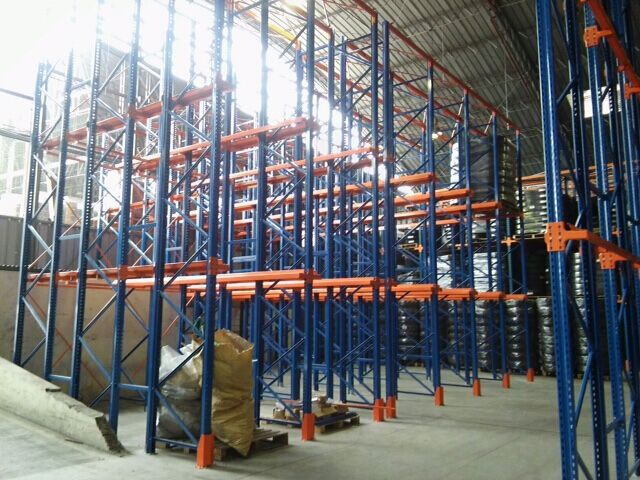
Walk into any modern warehouse—from Shanghai’s e-commerce hubs to Berlin’s cold storage facilities—you’ll likely see drive-in racking. This high-density system lets forklifts drive directly into racks, becoming a global supply chain staple. But why is it so popular, and do its uses vary globally? Let’s explore how it’s reshaping warehouses worldwide.

First, What Makes Drive-In Racking Irreplaceable?

Drive-in racking’s core advantage is maximizing storage density—up to 75% more than traditional selective racks—by minimizing aisle space. It uses a LIFO (Last-In, First-Out) method, perfect for non-perishable bulk or seasonal goods, and its modular design is easy to install and reconfigure.

Drive-In Racking in International Markets: Mature Applications

In Europe, North America, and Oceania, drive-in racking has long been integrated into warehouses, tailored to local needs.

Europe: Cold Storage and Bulk Distribution

Europe’s strict food safety rules make drive-in racking essential for cold storage. Countries like Germany and the Netherlands use it to maximize space in temperature-controlled facilities, cutting cooling costs. It’s also used in automotive and aerospace industries for bulk parts storage.

North America: E-Commerce and Seasonal Inventory

E-commerce growth drives drive-in racking adoption in U.S. and Canadian fulfillment centers, ideal for storing large quantities of identical products. It also helps avoid costly expansions in space-scarce urban areas, and is used for automotive parts and non-temperature-sensitive chemicals.

Oceania: Agriculture and Mining Supply

In Australia and New Zealand, drive-in racking supports agriculture (storing grains, fertilizers) and mining (heavy equipment parts). Its durability makes it perfect for rugged, remote environments.

Drive-In Racking in China: Rapid Growth

China’s drive-in racking use is booming, fueled by e-commerce, manufacturing upgrades, and cold storage demand, with a focus on efficiency and intelligence.

E-Commerce Fulfillment Centers

Giants like Alibaba and JD.com use drive-in racking to maximize storage density in their fulfillment centers. 30% of new e-commerce warehouses in China now use it, with growth expected to continue.

Cold Storage for Food and Pharmaceuticals

Growing demand for fresh/frozen foods drives its use in cold storage, reducing cooling costs. Pharmaceutical warehouses also use it for bulk non-temperature-sensitive supplies, meeting GMP standards.

Manufacturing and Automotive Sectors

China’s manufacturing (especially NEVs and electronics) relies on drive-in racking for raw materials and components. It’s also integrated with IoT and digital twin technologies for smarter operations.

Global Commonalities and Key Differences

While all regions use drive-in racking for high-volume, homogeneous goods and space savings, applications differ: Europe focuses on cold chain compliance; North America on e-commerce; China on rapid growth and smart integration. Mature markets have stricter safety standards.

13th, March, 2026

By Daphne Wang

Add: NO.409 West Jianshe Road, Economic Development Zone, Jinhu County, Jiangsu Province, China

订阅

请继续阅读、关注、订阅,我们欢迎您告诉我们您的想法。

facebook linkedin youtube

版权 2026@ 江苏正贸仓储设备制造有限公司 版权所有。 网站地图 | 博客 | Xml | 隐私政策 网络支持

留言

留言
如果您对我们的产品感兴趣并想了解更多详情,请在此留言,我们会尽快回复您。
提交

产品

whatsApp

接触